 English
 русский
 Français
 中文简体
中文简体 Português
 Español
 italiano
 عربى
عربى فارسی
فارسی

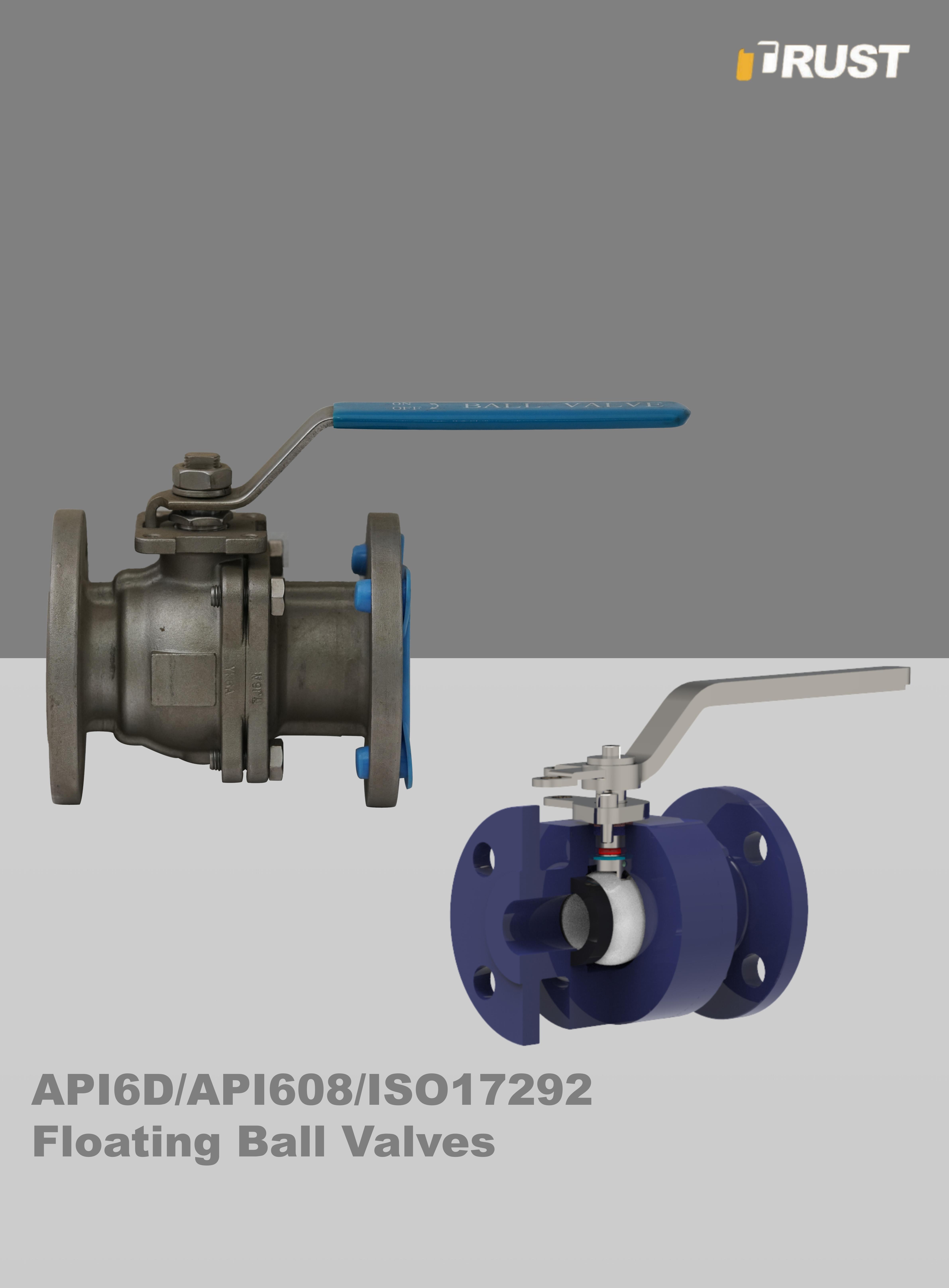
The core difference is this: in a Soft-Seated Floating Ball Valve, the ball is not fixed — it floats freely between two seats and relies on upstream line pressure to generate sealing force. In a trunnion-mounted design, the ball is anchored at the top and bottom by trunnion bearings, and the seats are spring-loaded to contact the ball. This fundamental mechanical distinction drives every difference in performance, application range, and cost between the two designs.
How the Floating Ball Mechanism Works
In a Soft-Seated Floating Ball Valve, the ball is held in place only by two soft seats — typically made of PTFE, RPTFE, or Nylon — and is free to move laterally within the valve body. When upstream pressure is applied, the ball is physically pushed downstream against the outlet seat. This metal-to-soft-seat contact creates a tight, bubble-tight shut-off, typically achieving ANSI/FCI 70-2 Class VI leakage — the highest standard for soft-seated valves.
Because sealing depends on line pressure acting on the ball, the Soft-Seated Floating Ball Valve is inherently a pressure-assisted design. The greater the upstream pressure, the harder the ball presses against the downstream seat, improving shut-off. However, this same characteristic means that at very high pressures, the contact force becomes excessive, causing accelerated seat wear and demanding significantly higher operating torque to open or close the valve.
How the Trunnion-Mounted Design Works
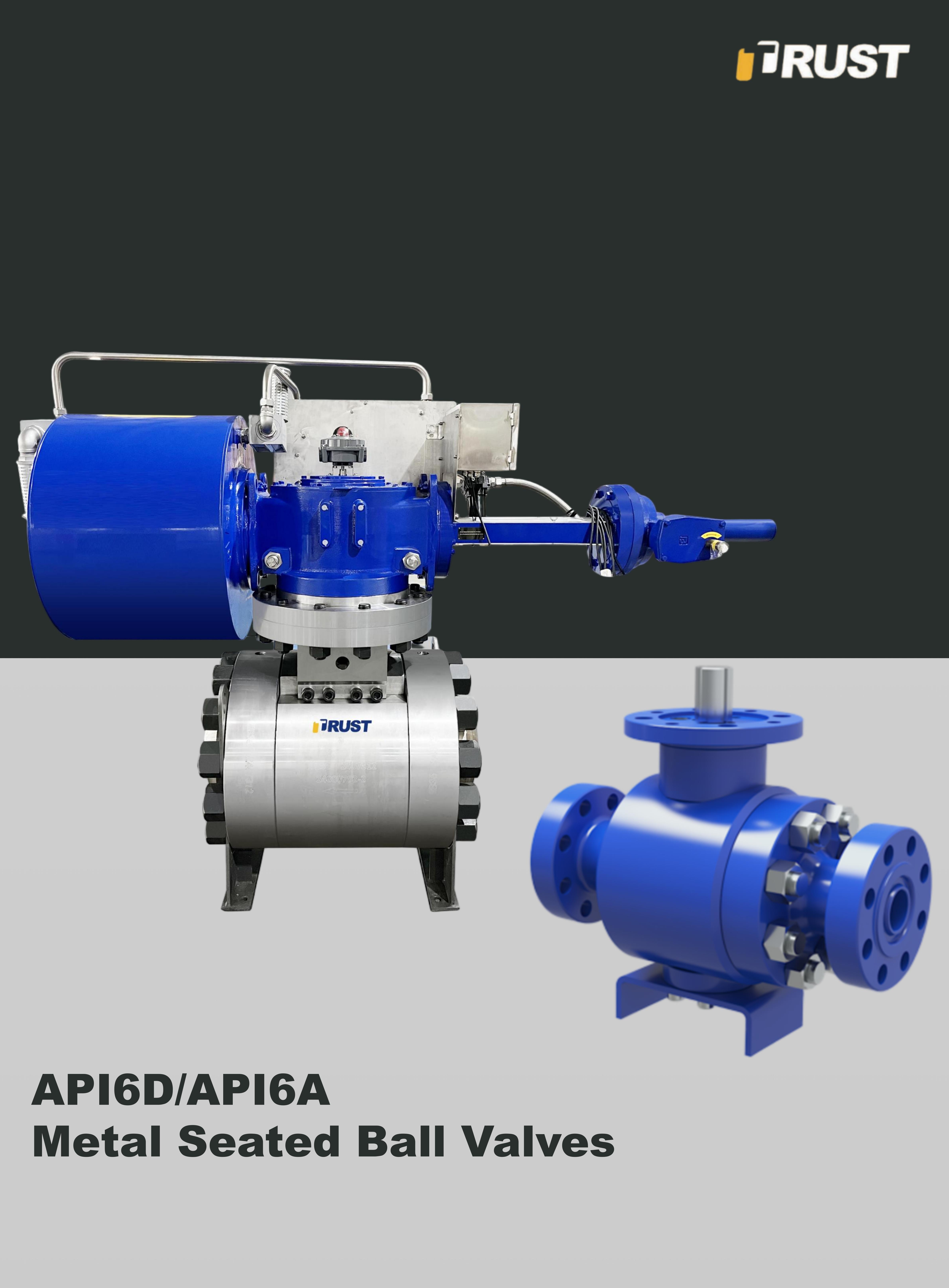
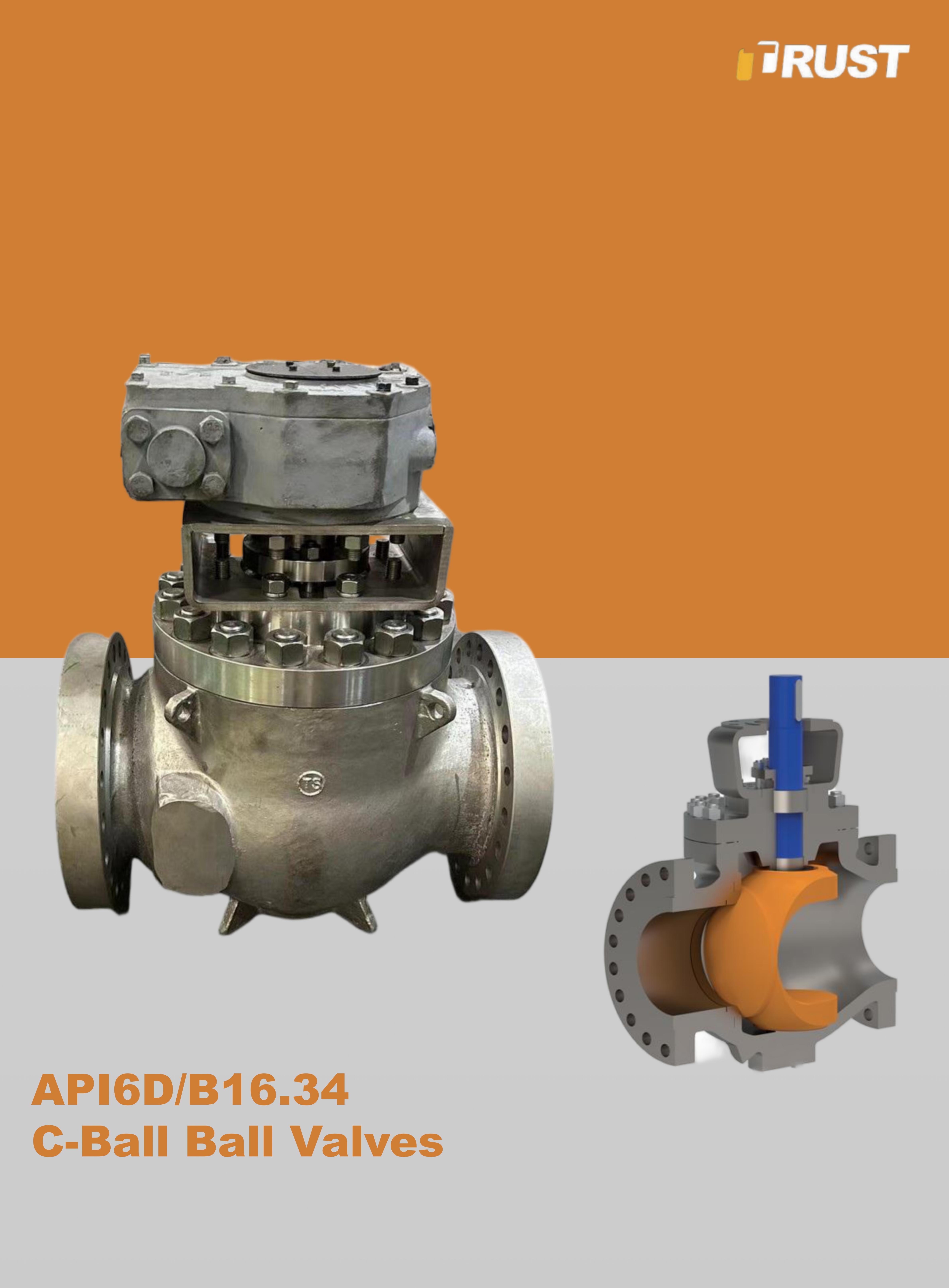
A trunnion-mounted ball valve fixes the ball rigidly in place using upper and lower trunnion shafts that are supported by bearings in the valve body. The ball does not float or move laterally. Instead, spring-loaded seats travel toward the ball to maintain contact and sealing. When line pressure rises, it actually acts on the back of the seat to reinforce contact — but the ball itself absorbs no lateral load because the trunnions transfer all hydraulic forces directly into the valve body structure.
This design dramatically reduces the operating torque required at high pressures, since stem friction is independent of line pressure. A trunnion-mounted valve handling 1,000 psi may require 40–60% less actuation torque than a comparably sized floating ball valve under the same conditions. This makes trunnion designs the standard choice for large-diameter and high-pressure pipelines.
Side-by-Side Comparison
The table below summarizes the primary technical distinctions between a Soft-Seated Floating Ball Valve and a trunnion-mounted ball valve across the most critical selection parameters.
| Parameter | Soft-Seated Floating Ball Valve | Trunnion-Mounted Ball Valve |
|---|---|---|
| Ball Support | Held by seats only (floating) | Fixed by top/bottom trunnion shafts |
| Sealing Mechanism | Line pressure pushes ball onto downstream seat | Spring-loaded seats contact fixed ball |
| Typical Pressure Range | Up to ~600–1,500 psi (Class 150–300) | Up to 10,000+ psi (Class 150–2500) |
| Typical Size Range | ½" to 4" (DN15–DN100) | 2" to 60"+ (DN50–DN1500) |
| Operating Torque | Increases with line pressure | Largely independent of line pressure |
| Leakage Class | Class VI (bubble-tight) | Class IV–VI depending on seat design |
| Cost | Lower | Higher (more complex structure) |
| Best Application | Small-diameter, low-to-medium pressure | Large-diameter, high-pressure pipelines |
Pressure and Size Limitations
The Soft-Seated Floating Ball Valve is most reliably applied in pipeline sizes from ½ inch to 4 inches (DN15 to DN100) and pressure classes of ASME Class 150 to Class 300, corresponding to roughly 285–740 psi at ambient temperature. Beyond these ranges, the lateral force exerted on the ball by line pressure becomes so large that:
- Seat deformation and accelerated wear become significant concerns.
- Stem and packing assembly must bear excessive side-load forces.
- Manual actuation becomes impractical without gearbox assistance.
Trunnion-mounted valves face none of these constraints because the trunnion bearings absorb all hydraulic side loads. This is why every major pipeline standard — including API 6D — specifies trunnion mounting as the preferred construction for ball valves in sizes above 4 inches or pressures above Class 600 in critical service.
Seat Contact Force and Sealing Performance
One of the clearest advantages of the Soft-Seated Floating Ball Valve in its intended size and pressure range is its sealing performance. Because upstream pressure actively drives the ball into the downstream seat, zero-leakage shut-off is easier to achieve without complex spring mechanisms. PTFE seats — the most common soft seat material — provide:
- Operating temperature range: -29°C to +180°C (-20°F to +356°F)
- Excellent chemical resistance to most acids, solvents, and hydrocarbons.
- Consistent Class VI shut-off over thousands of operating cycles.
Trunnion-mounted valves can also achieve Class VI sealing with soft inserts, but this requires more precise seat spring calibration and tighter manufacturing tolerances — adding both cost and complexity. For pure tight shut-off in moderate service, the Soft-Seated Floating Ball Valve is often the more cost-efficient solution.
Double-Block-and-Bleed Capability
Trunnion-mounted ball valves naturally support double-block-and-bleed (DBB) functionality because both upstream and downstream seats can independently seal against the fixed ball. This allows the valve cavity to be isolated and vented — a critical safety requirement in oil and gas, chemical processing, and custody transfer metering applications.
A standard Soft-Seated Floating Ball Valve provides only single-direction, pressure-assisted sealing and does not inherently offer DBB capability. Specialized floating ball valve designs can incorporate a secondary upstream seat seal, but these are non-standard, costlier, and less reliable than trunnion-mounted DBB designs. If DBB is a process requirement, a trunnion-mounted design is the correct selection.
Actuation and Automation Considerations
Because operating torque in a Soft-Seated Floating Ball Valve is directly proportional to line pressure, actuator sizing must account for the worst-case pressure scenario — typically the maximum allowable operating pressure (MAOP). Under-sizing an actuator for a floating ball valve is a common and costly field error.
For trunnion-mounted valves, torque is more predictable and stable across the pressure range, simplifying actuator selection. Both valve types use ISO 5211 standard mounting flanges, but the torque output requirements will differ significantly. For example, a 3-inch floating ball valve at 600 psi may require 40–80 Nm of torque, while a trunnion-mounted equivalent may only require 20–35 Nm under the same conditions.
When to Choose Each Design
Choose a Soft-Seated Floating Ball Valve when:
- Pipeline size is 4 inches or smaller.
- Operating pressure is within ASME Class 150 to Class 300.
- Bubble-tight Class VI shut-off is required at moderate pressures.
- Budget constraints favor a simpler, lower-cost valve body.
- The application involves clean fluids, general utilities, or chemical lines.
Choose a Trunnion-Mounted Ball Valve when:
- Pipeline size exceeds 4–6 inches or pressure exceeds Class 300.
- Low, predictable actuation torque is required for reliable automation.
- Double-block-and-bleed isolation is mandated by process safety requirements.
- High-cycle, high-pressure service demands extended seat life.
- Applications include oil and gas transmission, refining, or subsea service.
The Soft-Seated Floating Ball Valve and the trunnion-mounted ball valve are both highly effective isolation devices, but they are engineered for fundamentally different service conditions. The floating design excels in small-bore, moderate-pressure applications where bubble-tight sealing and low cost are the priorities. The trunnion design is the engineering standard for large-diameter, high-pressure, and safety-critical pipelines where torque stability, DBB capability, and long service life are non-negotiable. Selecting the wrong design for the pressure class or pipe size is one of the most common valve specification errors in the field — understanding the mechanical difference between these two designs is the first step to making the correct choice.
 No.100 Xiejin Avenue, Funing County Economic Development Zone, Yancheng City, Jiangsu Province
  +86-515-87398111
  office@trustvalve.com