 English
 русский
 Français
 中文简体
中文简体 Português
 Español
 italiano
 عربى
عربى فارسی
فارسی

When it comes to head loss in high-flow applications, Silent Check Valves generally outperform Swing Check Valves, offering lower pressure drop due to their spring-assisted, inline disc design. However, the right choice depends on your specific system conditions, fluid type, pipe size, and total cost considerations. Understanding the head loss characteristics of each valve type is essential for optimizing pump efficiency and minimizing energy costs in demanding flow environments.
How Head Loss Occurs in Check Valves
Head loss in any check valve is primarily caused by the resistance the valve's internal components create as fluid passes through. The disc geometry, hinge mechanism, and internal flow path all contribute to the pressure drop. In high-flow systems — typically those exceeding flow velocities of 3 m/s (10 ft/s) — even minor design differences between valve types can result in significant energy losses over time.
The head loss across a check valve is commonly expressed using the formula:
ΔH = K × (V² / 2g)
Where ΔH is the head loss, K is the resistance coefficient, V is the flow velocity, and g is gravitational acceleration. The K value differs substantially between a swing type check valve and a silent check valve, making it a critical parameter for high-flow system design.
Swing Check Valve: Head Loss Profile
A swing type check valve operates by using a hinged disc that swings open with forward flow and closes under reverse flow or gravity. This simple mechanism is cost-effective and highly reliable, but it comes with notable head loss implications in high-flow scenarios.
Flow Path Obstruction
The hinged disc of a swing check valve, even when fully open, partially obstructs the flow path. The disc swings to roughly 60°–85° open depending on flow velocity, meaning full bore clearance is rarely achieved. This creates turbulence and increased resistance, pushing the K value to a typical range of 1.0–2.5 for standard swing type check valves, compared to 0.5–1.2 for many silent check valve designs.
Performance in Large-Diameter Pipes
In large-diameter pipelines (DN200 and above), a swing check valve tends to perform more favorably because the disc opens more completely relative to the flow area. However, as velocity increases beyond 4 m/s, disc flutter can occur, causing intermittent pressure fluctuations that add to the effective head loss and accelerate wear on the hinge pin and disc seat.
Material Variants and Their Impact
Material choice also plays a role. A PVC swing check valve, for example, is commonly used in lower-pressure water supply, irrigation, and chemical dosing lines where flow velocities are moderate. While a PVC swing check valve offers excellent corrosion resistance and lower cost, its lighter disc weight can cause more pronounced flutter at high velocities, increasing head loss variability compared to cast iron or stainless steel variants.
Silent Check Valve: Head Loss Profile
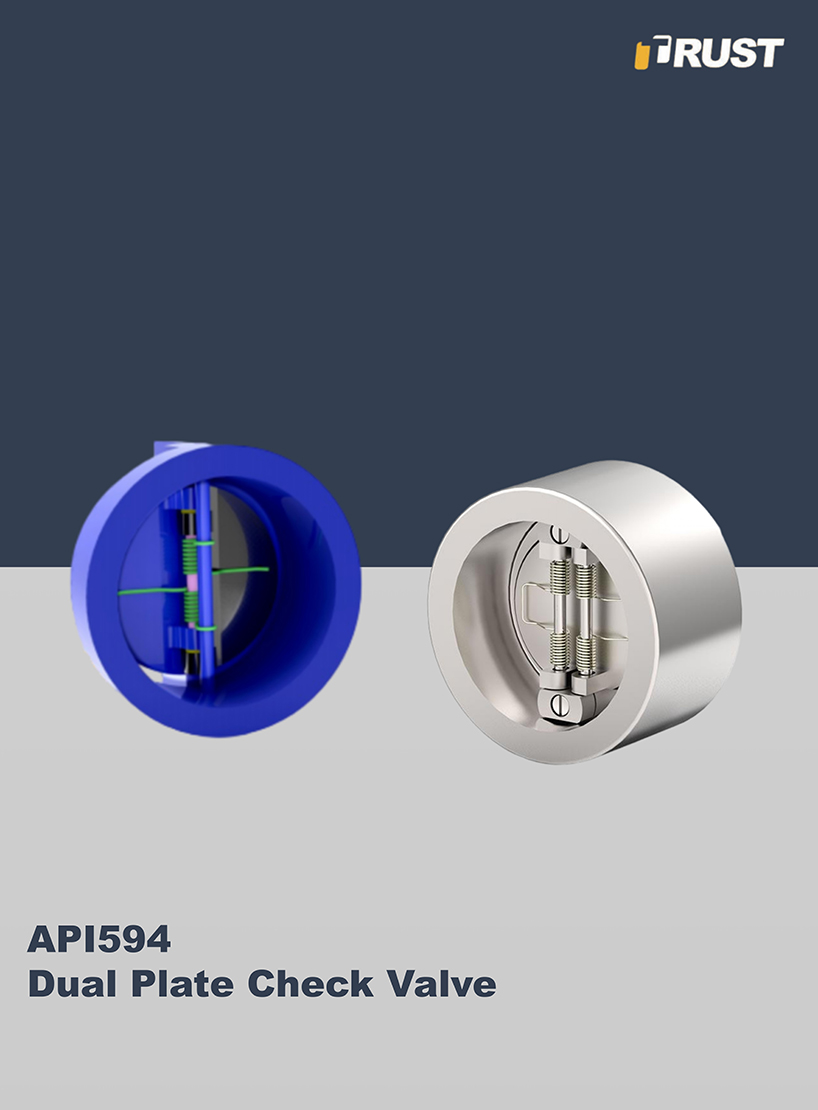
Silent check valves — also called non-slam or spring-loaded check valves — use a spring-assisted disc or dual-plate mechanism positioned inline with the flow. This design closes the disc before reverse flow develops, virtually eliminating water hammer and significantly reducing turbulence.
Streamlined Flow Path
Because the disc in a silent check valve travels axially (along the flow axis) rather than swinging sideways, it creates far less flow disturbance. The result is a K value typically between 0.5 and 1.2, translating to measurably lower head loss in high-flow conditions. In a system running at 3 m/s through a DN150 pipe, this difference can represent a pressure saving of 0.3–0.8 bar compared to a swing type check valve.
Spring Tension Trade-Off
One important nuance is that the spring in a silent check valve introduces a cracking pressure — the minimum upstream pressure needed to open the disc. Typically, this ranges from 0.05 to 0.3 bar. In high-flow systems where upstream pressure is consistently high, this is negligible. But in low-differential-pressure systems, this cracking pressure can itself become a source of head loss, occasionally negating the valve's efficiency advantage over a swing type check valve.
Direct Comparison: Key Head Loss Metrics
| Parameter | Swing Check Valve | Silent Check Valve |
|---|---|---|
| Typical K Value | 1.0 – 2.5 | 0.5 – 1.2 |
| Cracking Pressure | Very Low (gravity-driven) | 0.05 – 0.3 bar |
| Disc Flutter Risk | High at V > 4 m/s | Minimal |
| Water Hammer Risk | Moderate to High | Very Low |
| Best for Pipe Size | DN50 – DN600+ | DN25 – DN400 |
| Installation Flexibility | Horizontal preferred | Any orientation |
| Relative Cost | Lower | Higher |
Real-World Application Scenarios
Choosing between the two valve types becomes clearer when viewed through the lens of specific applications:
- Municipal water distribution: A swing type check valve is widely used in large-diameter mains (DN300+) where the lower K value impact is outweighed by the valve's cost advantage and simplicity of maintenance.
- HVAC pump discharge lines: Silent check valves are the preferred choice due to their low head loss, non-slam operation, and ability to be installed vertically — critical in compact mechanical rooms.
- Chemical processing: A PVC swing check valve is frequently specified for corrosive fluid lines at moderate flow rates, where chemical compatibility is the primary concern and flow velocity is controlled below flutter thresholds.
- Fire suppression systems: Silent check valves are favored for their rapid response and minimal head loss, which helps maintain required residual pressures at sprinkler heads.
- Irrigation networks: A PVC swing check valve or a standard swing type check valve is commonly used for its low cost and ease of replacement in above-ground or buried lateral lines.
Energy Cost Implications Over Time
Head loss is not just a hydraulic concern — it directly affects energy consumption and operating costs. Consider a pump system operating at 200 m³/h through a DN150 pipeline running 6,000 hours per year. If the swing check valve introduces 0.5 bar more head loss than a silent check valve, and the pump operates at 75% efficiency:
- Additional power demand: approximately 3.7 kW
- Annual extra energy consumption: approximately 22,200 kWh
- At €0.15/kWh, this adds up to roughly €3,330 per year in unnecessary energy costs
Over a 10-year service life, that gap can easily exceed the cost premium of specifying a silent check valve from the outset, making it a financially sound decision for high-flow, continuous-duty systems.
When a Swing Check Valve Remains the Better Choice
Despite the head loss advantage of silent check valves, there are clear situations where a swing check valve is still the more appropriate selection:
- Large-diameter, low-velocity systems: When pipe diameters exceed DN400 and velocities remain below 2 m/s, the head loss difference between the two types narrows significantly, making the swing check valve's lower cost more attractive.
- Slurry or solids-laden flows: The unobstructed bore of a swing type check valve handles particulate-laden fluids better than most silent check valve designs, which can clog or wear faster in such conditions.
- Budget-constrained projects: In non-critical or intermittent-duty applications, the lower purchase and installation cost of a swing check valve — especially a PVC swing check valve for plastic piping systems — often justifies its slightly higher head loss.
- Gravity-fed or very low-pressure systems: The near-zero cracking pressure of a swing check valve makes it more suitable when upstream driving pressure is minimal.
Key Takeaways for System Designers
When evaluating head loss characteristics between these two valve types for high-flow applications, keep the following practical points in mind:
- Always calculate the K value and expected head loss at your system's design flow rate before specifying either valve.
- For continuous high-flow pump discharge systems, the silent check valve's lower head loss typically delivers a better total cost of ownership.
- A swing type check valve remains a reliable, cost-effective solution for large-bore, moderate-velocity, or particulate-laden service conditions.
- Specify a PVC swing check valve where corrosion resistance and economy are the primary drivers, and where flow velocity stays within the valve's stable operating range.
- Factor in installation orientation — silent check valves offer greater flexibility, while most swing check valves require horizontal or specific-angle installation for proper disc operation.
The head loss comparison between a Swing Check Valve and a Silent Check Valve is not a simple win-or-lose verdict. Silent check valves win on pressure efficiency in high-flow, high-velocity systems; swing check valves win on simplicity, cost, and suitability for large-bore or solids-handling service. A thorough hydraulic analysis matched to your specific operating conditions will always yield the best specification decision.

 No.100 Xiejin Avenue, Funing County Economic Development Zone, Yancheng City, Jiangsu Province
  +86-515-87398111
  office@trustvalve.com