 English
 русский
 Français
 中文简体
中文简体 Português
 Español
 italiano
 عربى
عربى فارسی
فارسی

Engineering / Flow Control
The Basic Working Principle of a Butterfly Valve
How a single rotating disc, turned through a quarter of a circle, becomes the quiet mechanism that starts and stops the flow of an entire system.
A butterfly valve works by rotating a circular disc mounted on a central shaft inside a cylindrical body. When the disc is turned parallel to the flow path, the valve is fully open and fluid passes through with minimal obstruction. When the disc is turned perpendicular to the flow path, it blocks the pipe bore and stops the flow entirely.
This is the core answer to how the device operates: a quarter-turn (90-degree) rotation of the disc moves the valve between fully open and fully closed positions, and any angle in between allows partial flow, giving the valve both shut-off and throttling capability in a single compact design.
Unlike gate valves or globe valves, which rely on a sliding or lifting mechanism that can take many turns to fully open, a butterfly valve achieves the same result with a single quarter-turn motion. This makes it faster to operate, mechanically simpler, and generally lighter in weight than comparable valve types of the same pipe diameter. The disc remains within the flow path at all times, even when fully open, which is one of the defining characteristics of this valve family.
Core Components That Make the Valve Function
To understand how flow is controlled, it helps to know the five main parts that work together inside every butterfly valve, from a small wafer butterfly valve used in HVAC piping to a large industrial unit installed on a water treatment line.
- Body — the outer housing that fits between two pipe flanges and holds all internal components in alignment.
- Disc — the rotating plate that directly blocks or allows fluid flow.
- Stem — connects the actuator or handle to the disc and transmits rotational force.
- Seat — a resilient or metal ring that the disc presses against to create a seal when closed.
- Actuator / handle — the mechanism, manual or powered, that supplies the force to rotate the stem and disc.
A stainless steel butterfly valve used in a food processing or pharmaceutical line typically pairs a 316-grade stainless disc and stem with an EPDM or PTFE seat, because the metal resists corrosion from cleaning chemicals while the elastomer seat provides a reliable, hygienic seal.
How the Quarter-Turn Mechanism Physically Works
The stem passes through the top of the valve body and connects directly to the disc at its center or, in offset designs, slightly away from center. When an operator turns a lever, gear operator, or actuator, that rotational motion travels down the stem and pivots the disc around its axis. Because the disc is round and only slightly smaller than the internal bore of the valve body, even a small rotation changes how much of the pipe cross-section is open to flow.
butterfly valve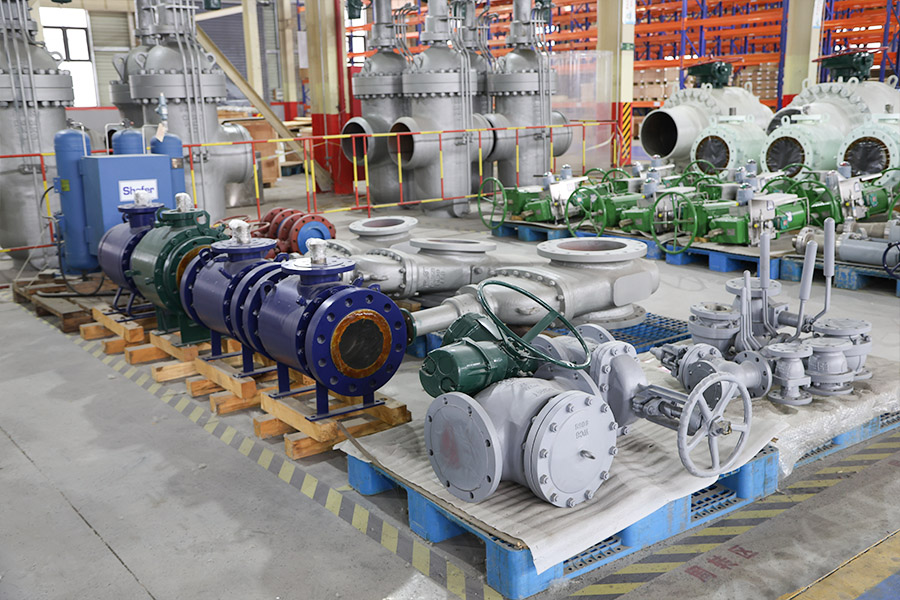
Manual Versus Powered Actuation
Smaller valves, including many wafer-style units under 6 inches in diameter, are often operated with a simple lever handle that locks into notched positions. Larger valves typically use a worm-gear operator to reduce the torque required by the operator, since larger discs face significantly higher fluid resistance. In automated systems, pneumatic or electric actuators replace the manual handle entirely, allowing the valve to open, close, or throttle in response to a control signal from a plant's automation system, often in under two seconds for quick-acting applications.
How Disc Position Determines Flow Rate
The relationship between disc angle and flow rate is not linear. Because the disc is round and the pipe is round, the open area changes disproportionately as the disc rotates. A common misconception is that a 45-degree opening equals 50% flow, but in practice the flow characteristic curve of a butterfly valve is steeper near the closed position and flatter near the fully open position. This behavior is important for engineers selecting a valve for throttling duty rather than simple on/off service.
| Disc Angle from Closed | Approximate Flow (%) | Typical Use Case |
|---|---|---|
| 0° | 0% | Fully closed, complete shut-off |
| 20° | ~10–15% | Fine throttling, low flow |
| 45° | ~35–40% | Moderate flow control |
| 70° | ~75–80% | High flow, light throttling |
| 90° | 100% | Fully open, unrestricted flow |
Because of this non-linear behavior, valves used strictly for throttling are usually operated within the 20 to 70-degree range, since positions closer to fully open or fully closed offer poor control resolution and can accelerate wear on the seat and disc edge.
How the Seat Creates a Reliable Seal
When the disc rotates to the fully closed position, its outer edge presses against a seat that lines the inner circumference of the valve body. In most general-purpose valves, this seat is molded from an elastomer such as EPDM, NBR, or Viton, which compresses slightly around the disc edge to form a tight, bubble-tight seal capable of holding Class VI shut-off performance under standard test conditions. In high-temperature or high-pressure applications where elastomers would degrade, manufacturers use metal seats, often in combination with a triple-offset disc design, to achieve a reliable seal without relying on rubber compression.
Concentric, Double-Offset, and Triple-Offset Designs
In a concentric design, the stem passes through the exact center of the disc, and the disc contacts the seat uniformly around its full circumference. This design is simple and cost-effective, but the constant rubbing between disc and seat during rotation causes gradual wear. Double-offset and triple-offset designs shift the stem position away from the disc's center and, in the triple-offset case, also angle the sealing surface itself. These designs lift the disc away from the seat during most of its rotation, only making contact in the final few degrees before full closure, which significantly extends seat life and reduces operating torque.
Info
Triple-offset designs reduce seat friction throughout most of the rotation cycle, which is why they are favored for high-cycle, critical shut-off service.
Common Valve Body Styles and Material Choices
The working principle described above applies across body styles, but installation and application requirements vary. A wafer butterfly valve is designed to be sandwiched directly between two pipe flanges using long through-bolts, making it compact and lightweight, though it typically cannot be removed from a pipeline without draining or isolating both sides. A lug-style valve, by contrast, uses threaded inserts on the body so it can be installed with separate bolts on each side, allowing one end of a pipeline to be disconnected while the other remains bolted in place, which is useful for dead-end service or maintenance flexibility.
Material selection is equally important to how the valve performs over time. A stainless steel butterfly valve is commonly specified for corrosive fluids, seawater, chemical processing, and sanitary applications because stainless steel resists pitting and rust far better than cast iron or carbon steel. Cast iron and ductile iron bodies remain common in general water and HVAC systems where cost is a primary concern and the fluid is not aggressive.
Pressure, Temperature, and Flow Capacity Considerations
Because the disc always remains partially within the flow path, even at full open, a butterfly valve typically has a slightly higher pressure drop than a full-bore gate or ball valve of the same nominal diameter. In most piping systems this difference is negligible, but in high-flow applications, engineers account for it when sizing pumps. Standard rubber-seated valves are commonly rated for pressures up to 232 psi (16 bar) and temperatures up to around 200°F (93°C), while metal-seated, high-performance designs can handle pressures exceeding 1,500 psi and temperatures above 800°F (427°C), depending on the seat and body material selected.
Warning
Exceeding the pressure or temperature rating of a rubber-seated valve can cause premature seat degradation and unexpected leakage — always confirm ratings against actual service conditions.
Installation and Maintenance Practices That Affect Performance
Proper installation directly affects how well a butterfly valve performs its intended function. The disc must have adequate clearance to fully rotate without striking adjacent pipe fittings, elbows, or reducers, so manufacturers typically recommend a minimum straight-pipe run of several diameters upstream and downstream of the valve. Flange bolts must be torqued evenly in a cross pattern to avoid distorting the seat, which could otherwise create leak paths even when the disc is fully closed.
- Inspect the seat periodically for cracking, hardening, or compression set, especially in valves subjected to frequent cycling.
- Check stem packing or O-rings for leakage around the actuator connection point.
- Verify that the disc reaches full open and full closed positions without binding, which can indicate stem misalignment or debris buildup.
- Lubricate gear operators and bearings according to the manufacturer's recommended service interval.
Danger
Neglecting these steps is one of the most common causes of premature valve failure, particularly seat wear from disc misalignment and stem leakage from degraded packing.
Choosing the Right Butterfly Valve for the Application
Selecting the correct valve starts with understanding the working principle described above and matching it to the specific service conditions. For general water, air, or HVAC systems with moderate pressure, a rubber-seated concentric valve in a wafer body offers a cost-effective and space-saving solution. For corrosive, sanitary, or high-purity applications, a stainless steel butterfly valve provides the corrosion resistance and cleanability required by strict process standards. For high-pressure, high-temperature, or critical shut-off service, a triple-offset design with a metal seat delivers the durability and sealing reliability that standard concentric valves cannot match over long service life.
Summary
Every butterfly valve operates on the same fundamental principle: a rotating disc within a pipe bore controls flow through a quarter-turn motion. The variations in body style, disc offset, seat material, and body metal exist to adapt that simple principle to the pressure, temperature, and chemical demands of a specific pipeline, ensuring reliable operation whether the application calls for a compact wafer butterfly valve in a commercial building or a heavy-duty stainless valve on an industrial process line.

 No.100 Xiejin Avenue, Funing County Economic Development Zone, Yancheng City, Jiangsu Province
  +86-515-87398111
  office@trustvalve.com