 English
 русский
 Français
 中文简体
中文简体 Português
 Español
 italiano
 عربى
عربى فارسی
فارسی

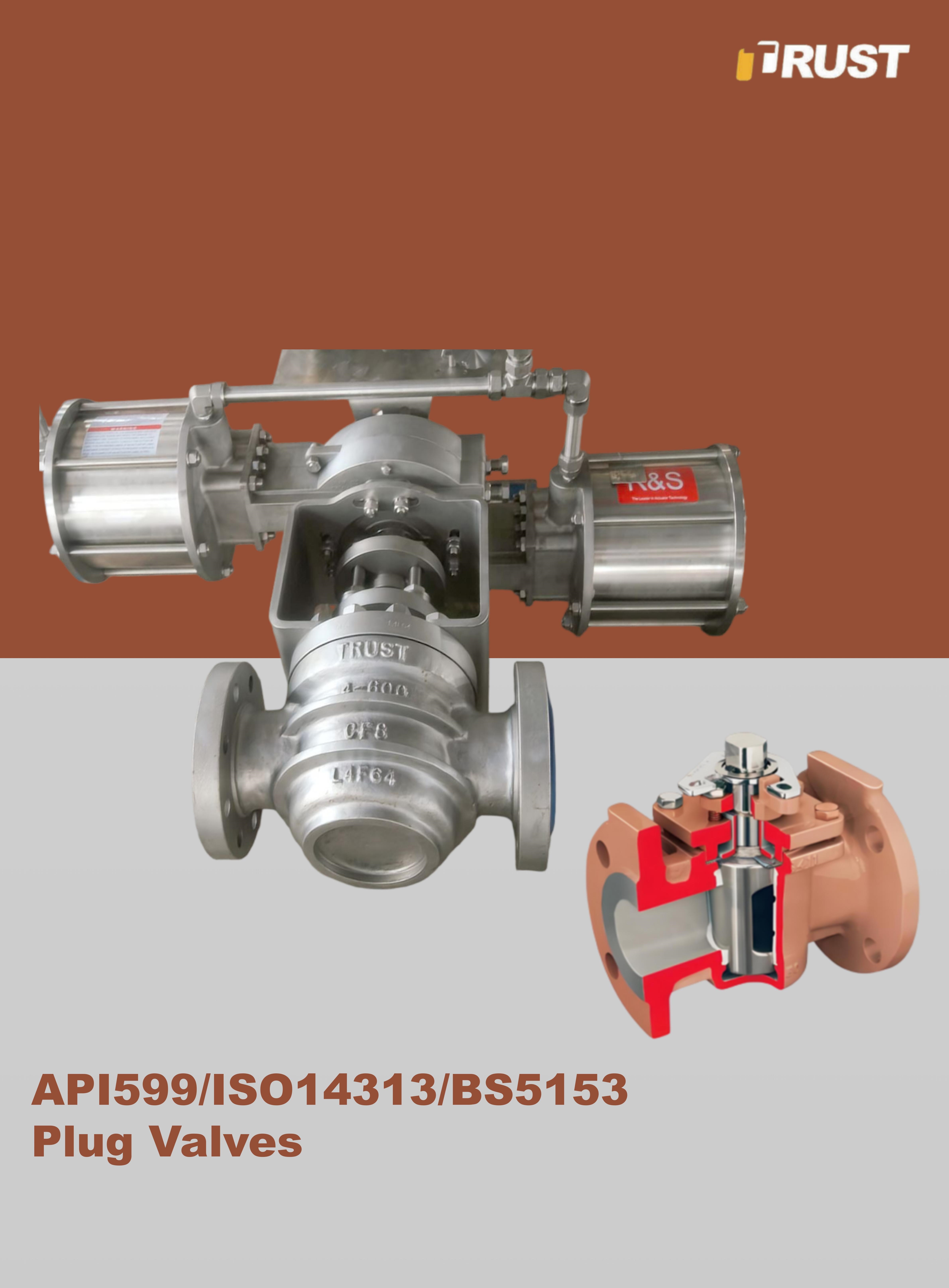
In space-restricted installations, a compact Plug Valve offers significant advantages over a conventional Plug Valve. Its smaller footprint, simplified design, and ease of operation allow installation in tight pipelines or machinery layouts where a conventional Plug Valve may be impractical. In most cases, a compact design reduces required clearance by up to 40% while maintaining similar flow capacity and reliability.
Design Differences Between Compact and Conventional Plug Valves
A conventional Plug Valve typically has a larger body and longer plug, designed for general-purpose pipelines with sufficient space. In contrast, a compact Plug Valve uses a shorter plug and a streamlined body to minimize external dimensions. The design optimizations include reduced stem height, simplified actuation mechanisms, and sometimes integration of a control plug valve feature for precise flow management.
The reduced body size does not compromise flow efficiency. Many compact valves achieve full bore or nearly full bore flow, which allows for the same flow rate as conventional models while saving space. For example, in a 4-inch line, a compact Plug Valve can reduce the installation envelope from 250mm height to 150mm, without affecting the volumetric flow rate.
Installation Benefits in Confined Spaces
One of the main advantages of a compact Plug Valve is its adaptability to limited space environments, such as chemical processing units, offshore platforms, and HVAC systems. When space is constrained, conventional Plug Valves often require additional elbow fittings or extensions to accommodate stems and actuators. Compact Plug Valves eliminate these requirements, providing easier access for operation and maintenance.
Additionally, compact Plug Valves allow for closer spacing between adjacent valves in multi-valve assemblies. This is particularly useful when installing a series of control plug valves where alignment and spacing are critical. The compact design ensures that operators can easily reach hand levers or actuators without interference from surrounding equipment.
Operational Efficiency and Flow Control
Compact Plug Valves maintain high operational efficiency similar to conventional Plug Valves. They provide smooth quarter-turn operation, minimal leakage, and reliable shutoff. When integrated as a control plug valve, they enable precise flow adjustments in tight piping systems, maintaining flow accuracy while reducing the required installation footprint.
In comparative testing, compact Plug Valves demonstrated a torque requirement reduction of up to 30% compared to larger conventional valves. This allows smaller actuators or manual handles to operate the valve effectively, reducing installation costs and enhancing safety in restricted spaces.
Maintenance and Durability Considerations
Maintenance in space-restricted environments can be challenging. Compact Plug Valves simplify servicing by providing easier access to the plug, stem, and seats. Many designs feature modular components that can be replaced without fully removing the valve from the pipeline, unlike conventional Plug Valves that often require larger maintenance clearances.
Durability is also preserved despite the smaller size. Materials such as stainless steel or coated alloys ensure compact Plug Valves resist corrosion and wear, particularly when handling abrasive or chemically aggressive fluids. In practice, compact designs have shown operational lifespans comparable to conventional Plug Valves under similar conditions.
Comparison Table: Compact vs Conventional Plug Valves
| Feature | Compact Plug Valve | Conventional Plug Valve |
|---|---|---|
| Installation Space | 40% smaller footprint | Requires larger clearance |
| Flow Rate | Full or nearly full bore | Full bore |
| Torque Requirement | 30% lower | Higher torque needed |
| Maintenance Accessibility | Easier in confined spaces | Requires larger working area |
| Use as Control Valve | Supports control plug valve operation | Limited or bulky integration |
Practical Applications and Use Cases
Compact Plug Valves are widely used in industries where space optimization is critical. Typical applications include chemical dosing lines, HVAC systems, offshore platforms, and pharmaceutical production lines. In each scenario, the smaller valve size reduces piping congestion and facilitates faster assembly without compromising system performance.
For example, in a pharmaceutical processing line with multiple control plug valves, compact designs allow operators to place valves closer together for efficient process control. Conventional Plug Valves, due to their larger size, often require additional piping or spacing adjustments, leading to higher costs and more complex maintenance.
For space-restricted installations, a compact Plug Valve offers significant advantages over a conventional Plug Valve. It reduces footprint, lowers torque requirements, facilitates maintenance, and supports precise control through integration as a control plug valve. Its efficiency, durability, and versatility make it the preferred choice when pipeline space is limited or when multiple valves must be installed in proximity.
When designing a piping system where space is at a premium, selecting a compact Plug Valve can enhance operational efficiency, reduce installation complexity, and maintain reliable flow control, all while achieving the performance of larger, conventional valves.
 No.100 Xiejin Avenue, Funing County Economic Development Zone, Yancheng City, Jiangsu Province
  +86-515-87398111
  office@trustvalve.com