 English
 русский
 Français
 中文简体
中文简体 Português
 Español
 italiano
 عربى
عربى فارسی
فارسی

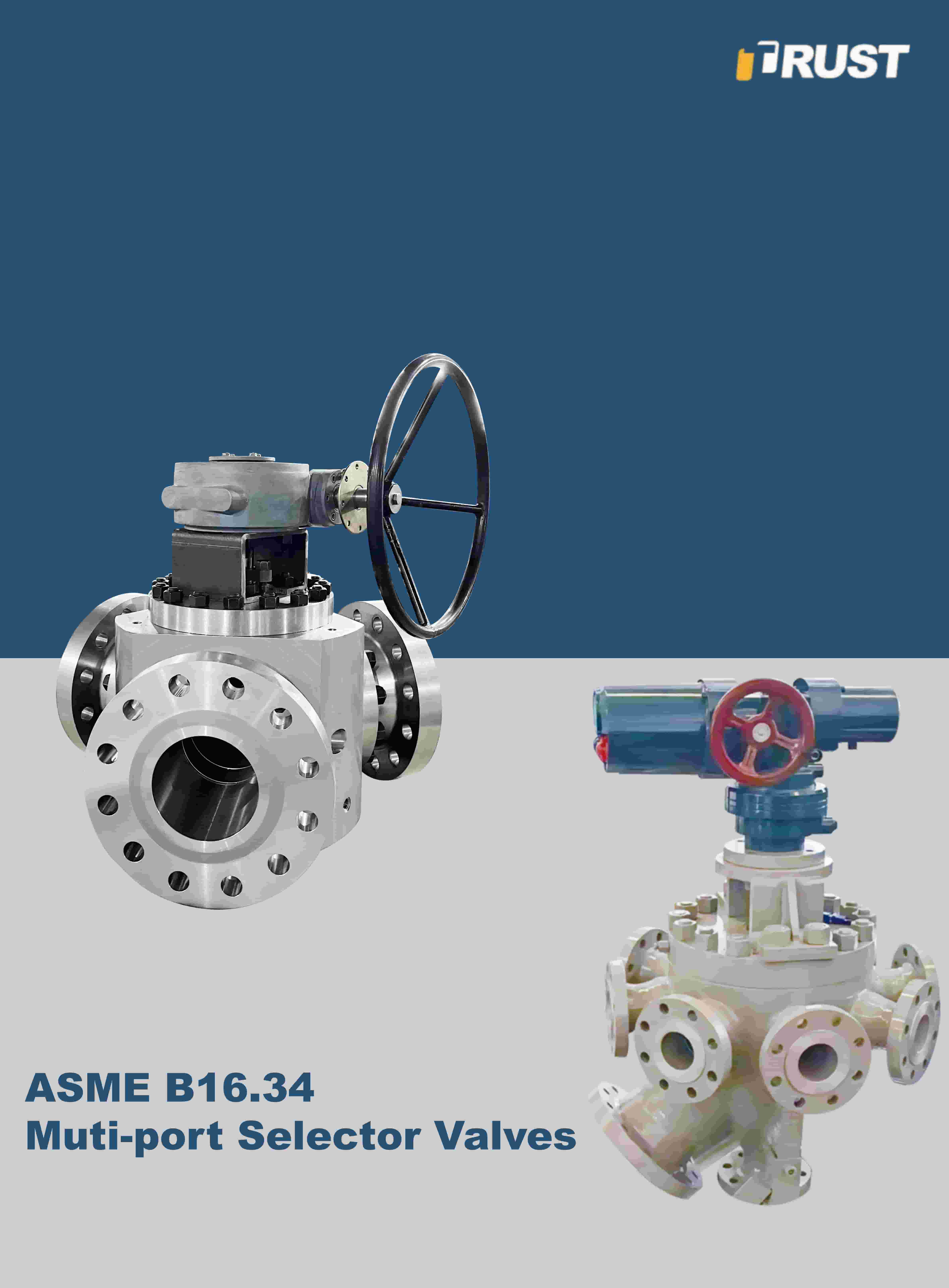
The Multi-Port Selector Valve produces a higher pressure drop than a three-way ball valve under equivalent flow conditions — typically ranging from 0.5 to 3.5 psi higher depending on port count, flow path geometry, and fluid velocity. However, this tradeoff is intentional: the Multi-Port Selector Valve offers directional control across multiple outlet paths that a three-way ball valve simply cannot replicate. Understanding the pressure drop differences between these two valve types is essential for engineers designing efficient, low-loss pipeline systems.
Why Pressure Drop Occurs Differently in Each Valve
Pressure drop in any valve is governed by the Darcy-Weisbach equation, where internal flow path geometry, fluid velocity, and the valve's flow coefficient (Cv) are the primary variables. A three-way ball valve uses a simple bored sphere with a T-port or L-port configuration. This design allows fluid to travel through a relatively smooth, short internal path with minimal turbulence.
A Multi-Port Selector Valve, by contrast, routes fluid through a more complex internal chamber with a rotating or sliding element that directs flow to one of several outlet ports — commonly 4, 6, 8, or more positions. Each additional port adds internal cavity volume and potential turbulence zones. The flow must navigate sharper directional changes, especially when selecting non-adjacent ports, which increases the resistance coefficient (K-factor) and elevates the resulting pressure drop.
Pressure Drop Data: Multi-Port Selector Valve vs Three-Way Ball Valve
The table below compares representative pressure drop values for a standard three-way ball valve and a Multi-Port Selector Valve at a common pipe size of 1 inch, with water flowing at 5 GPM and 10 GPM respectively.
| Valve Type | Port Count | Cv Value | ΔP at 5 GPM (psi) | ΔP at 10 GPM (psi) |
|---|---|---|---|---|
| Three-Way Ball Valve (T-port) | 3 | 28–35 | 0.20 – 0.32 | 0.82 – 1.28 |
| Multi-Port Selector Valve (4-port) | 4 | 18–25 | 0.40 – 0.78 | 1.60 – 3.12 |
| Multi-Port Selector Valve (6-port) | 6 | 12–18 | 0.77 – 1.74 | 3.09 – 6.94 |
| Multi-Port Selector Valve (8-port) | 8 | 8–13 | 1.48 – 3.91 | 5.92 – 15.63 |
As the data shows, pressure drop escalates significantly as port count increases. A 6-port multiport selector valve at 10 GPM can produce over 5× the pressure drop of a comparably sized three-way ball valve, making system pump sizing and energy budgeting critical when specifying these components.
Key Factors That Influence Pressure Drop in a Multi-Port Selector Valve
Not all Multi-Port Selector Valve designs behave the same way. Several variables determine how much pressure loss occurs in a given installation:
Number of Ports
More ports mean a larger internal cavity and longer flow path from inlet to selected outlet. A 4-port valve may show a Cv of 20–25, while an 8-port version of the same nominal size may drop to Cv 8–13. Each step up in port count reduces flow coefficient by roughly 20–30%.
Rotor or Disc Design
Rotary disc Multi-Port Selector Valves used in analytical or chromatography systems typically have very fine flow channels, creating high pressure drops intentionally to maintain precise flow control. Industrial rotary plug-style multiport selector valves are engineered with larger bore passages and lower K-factors to minimize system losses.
Selected Port Position
Pressure drop in a Multi-Port Selector Valve is not uniform across all port selections. Ports directly opposite the inlet (180°) tend to have 10–20% lower pressure drop than ports at oblique angles, due to smoother flow path alignment within the valve body.
Fluid Viscosity and Flow Rate
For viscous fluids such as hydraulic oils or slurries, pressure drop in a multiport selector valve increases disproportionately compared to water. At the same flow rate, switching from water (1 cP) to a light hydraulic oil (32 cP) can increase pressure drop by a factor of 2.5 to 4, making valve Cv sizing even more critical in those applications.
When a Three-Way Ball Valve Is the Better Choice for Low Pressure Drop
If your system requires only a single flow split or diversion between two outlet paths, a three-way ball valve is almost always the lower-resistance option. Its full-bore T-port design allows flow coefficients of 28–40 in a 1-inch valve, compared to 12–25 for a comparable multiport selector valve. The practical advantages of a three-way ball valve in pressure-sensitive systems include:
- Lower energy consumption due to reduced head loss across the valve
- Simpler actuator sizing requirements — less torque needed to operate
- Lower purchase cost for simple diversion tasks
- Proven reliability in high-cycle applications with easy seat replacement
For applications such as bypass loops, mixing circuits, or simple two-outlet distribution in HVAC and water treatment systems, a three-way ball valve delivers adequate directional control with minimal system impact.
When a Multi-Port Selector Valve Justifies Its Higher Pressure Drop
Despite its higher pressure drop, a Multi-Port Selector Valve is the only practical solution when a system requires sequential routing to three or more destinations from a single inlet. Replacing a 6-port multiport selector valve with individual three-way ball valves would require at least three separate valves, three actuators, and a complex interlock system to prevent simultaneous opening — all of which introduce additional pressure drop, leak points, and maintenance complexity.
Industries where the Multi-Port Selector Valve's capabilities outweigh its pressure penalty include:
- Chemical processing: Sequential dosing of reagents into multiple reactors from a single feed line
- Oil and gas: Well testing and multi-well sampling through a single flowmeter using a multiport selector valve manifold
- Water treatment: Filter bed sequencing where a single inlet must cycle through multiple media vessels
- Analytical instrumentation: Sample stream selection in gas chromatography and process analyzers
- Hydraulic test rigs: Routing pressurized fluid to multiple test circuits without manual reconnection
In these scenarios, engineers typically compensate for the pressure drop of a multiport selector valve by upsizing the pump by 10–25% or selecting the next nominal pipe size larger at the valve inlet.
How to Minimize Pressure Drop When Specifying a Multi-Port Selector Valve
When a multiport selector valve is the correct choice but pressure drop must be kept as low as possible, the following strategies are effective:
- Select the minimum port count required for the application. A 4-port multiport selector valve will always outperform a 6-port or 8-port version in terms of Cv.
- Upsize the valve body relative to the pipe diameter. Using a 1.5-inch Multi-Port Selector Valve on a 1-inch pipeline can reduce pressure drop by 40–60% by increasing the internal bore area.
- Choose a full-bore rotor design where available. Some manufacturers offer full-bore multiport selector valves with Cv values approaching those of three-way ball valves at the same port count.
- Optimize port selection sequencing in automated systems to favor low-resistance flow paths when process conditions allow.
- Use a low-viscosity compatible seat material such as PTFE, which reduces internal friction and contributes slightly to lower operational pressure drop compared to elastomeric seats.
Practical Selection Summary
Choosing between a Multi-Port Selector Valve and a three-way ball valve ultimately depends on system complexity and routing requirements, not pressure drop alone. Use the following framework:
| Requirement | Recommended Valve | Reason |
|---|---|---|
| 2-outlet diversion, minimum pressure loss | Three-Way Ball Valve | Higher Cv, simpler flow path |
| 3+ outlet sequential routing | Multi-Port Selector Valve | Single valve replaces multiple units |
| Compact automated sampling system | Multi-Port Selector Valve | Space efficiency and leak point reduction |
| High-flow, energy-critical pipelines | Three-Way Ball Valve | Lower operating cost over valve lifetime |
| Multi-well or multi-vessel process selection | Multi-Port Selector Valve | Eliminates interlock complexity |
The three-way ball valve will always have a lower pressure drop than a Multi-Port Selector Valve at the same pipe size and flow rate, but the multiport selector valve delivers routing capabilities that no simple two- or three-way valve can match. Proper Cv calculation, port count minimization, and valve body upsizing are the most effective tools for keeping pressure drop within acceptable limits when a multiport selector valve is the required solution.

 No.100 Xiejin Avenue, Funing County Economic Development Zone, Yancheng City, Jiangsu Province
  +86-515-87398111
  office@trustvalve.com