 English
 русский
 Français
 中文简体
 Português
 Español
 italiano
 عربى
 فارسی


4-Way Ball Valves in Stainless Steel: Port Pattern, Seat and Torque Decide the Result
Four ports, one ball, and a surprising number of ways to specify the wrong valve. A field-oriented selection guide for process engineers, skid integrators and buyers.
A skid builder on a demineralised water plant replaced three two-way valves and a tee with a single stainless steel four-way ball valve. Footprint halved, three leak paths vanished, and one actuator replaced three. Then commissioning started: the valve sent flow to the wrong header, because the drawing showed an L-port and the delivered ball was a T-port.
That is the whole lesson in one incident. On a four-way ball valve, the porting pattern decides what the valve does, the seat and seal materials decide what it can survive, and the torque budget decides whether the actuator will still move it after a year in service. The body material, including the words stainless steel, is the third question rather than the first.
What a Four-Way Ball Valve Actually Does
Inside the body sits one ball with two or three passages machined or cast through it. Rotating the stem through 90 degrees aligns different port pairs, so a single valve performs the work of two or three ball valves plus the fittings that would have joined them.
The gain is not only space. Every extra valve and every threaded or welded joint is a potential leak path, a maintenance item and a chance for an operator to open the wrong line at two in the morning. A four-way valve turns the whole changeover into one repeatable action, which is why it appears so often in sampling systems, duplex filter skids and water treatment headers.
The price of that convenience is mechanical. In a two-way ball valve, line pressure pushes the ball toward one seat while the other sits comparatively relaxed. In a four-way body, pressure can load two seats at once, and the cavity between them can trap liquid that expands as the line heats up. That is why a four-way valve of the same bore and class usually needs more breakaway torque than the two-way valve it replaced, and why actuator sizing deserves its own calculation instead of a rule of thumb.
Port Patterns: L, T and X
Port pattern belongs on the first line of the specification, yet it is the detail most often lost between the P&ID and the purchase order. The common patterns behave quite differently, and the same four-port body can be built with any of them.
| Pattern | Passages in the ball | Flow behaviour | Typical duty |
|---|---|---|---|
| L-port | Two, set at 90 degrees | Diverts flow between adjacent ports; each position connects a different pair | Source selection, diverting around a filter or softener |
| T-port | Three, forming a through and a branch | Splits or combines flow; one port stays common in both positions | Sampling manifolds, mixing, bypass during maintenance |
| X-port | Two straight, crossing passages | Swaps two independent flow paths at once with one quarter turn | Duplex filter changeover, double-block arrangements |
| Straight two-way | One | Simple on-off isolation, no diversion | Isolation upstream or downstream of the four-way valve |
Ask for the porting drawing with flow arrows for position one and position two, and quote the drawing number on the order. Words like changeover or cross-over mean different things to different suppliers. Where more than two circuits must be selected, a dedicated multiport selector valve usually gives a cleaner answer than stacking four-way bodies.
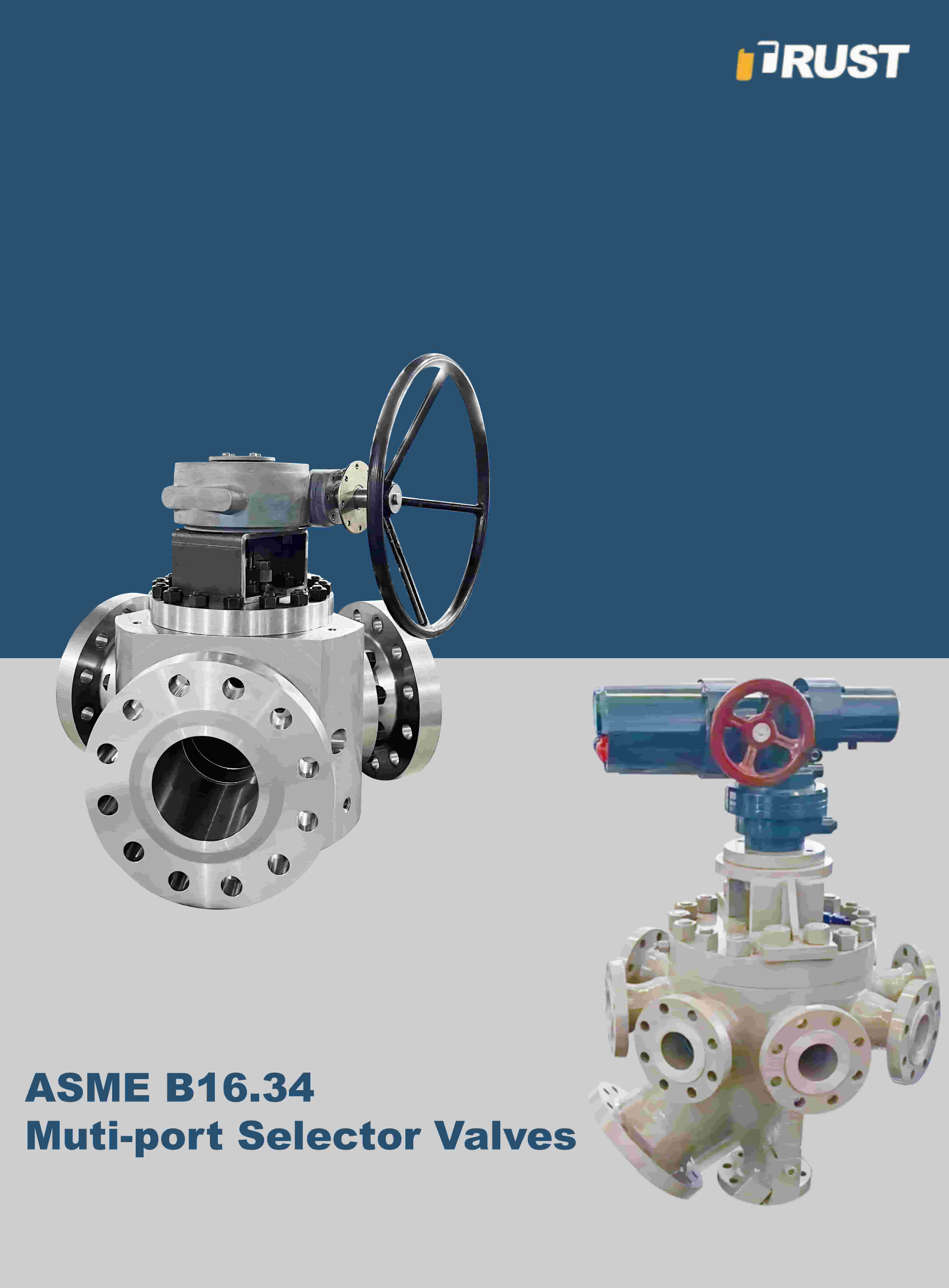 Multi-Port Selector Valves for Complex Flow RoutingFor systems needing more than two circuits, these selector valves offer 3- or 4-way and custom 2–6 port configurations with rotary switching.View Product →
Stainless Steel Is a Family, Not a Grade
Most four-way valves in this class are supplied in CF8M, the cast equivalent of 316, or CF3M for 316L, with forged 316 bodies on smaller sizes and higher ratings. The two designations are not interchangeable. The low-carbon L grade exists to survive welding without carbide precipitation, which matters on a fabricated or weld-end body; on a one-piece cast body it mainly buys corrosion margin.
Above 316 there are real options. Duplex 2205 offers roughly twice the yield strength and far better resistance to chloride stress corrosion cracking, which is exactly the failure mode that punishes a four-way valve with a stagnant cavity. Austenitic grades such as 904L or Alloy 20 enter the picture for sulphuric acid and mixed acid service.
Two checks are worth building into every enquiry. First, chlorides plus temperature is the pairing that destroys 316, and a warm chloride stream that behaved in a two-way valve will attack the same alloy in a body that traps liquid between seats. Second, on sour service, NACE MR0175 / ISO 15156 compliance must be stated for the ball, stem and internal trim, not only for the body.
Documentation
Request the heat number and an EN 10204 3.1 certificate for the body, ball and stem. On many four-way valves the ball and stem come from a different mill than the body, and the mill certificate should follow each part.
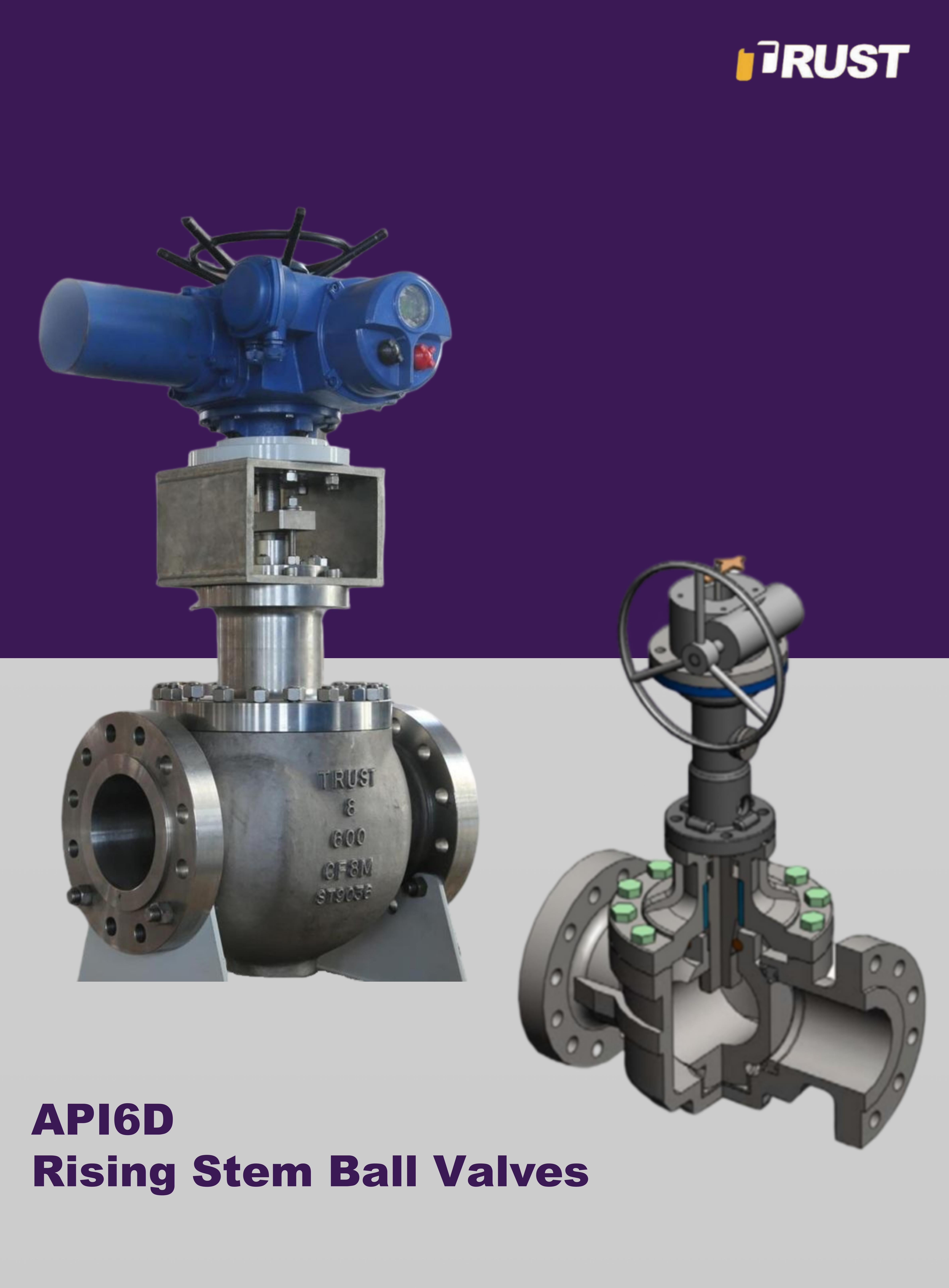
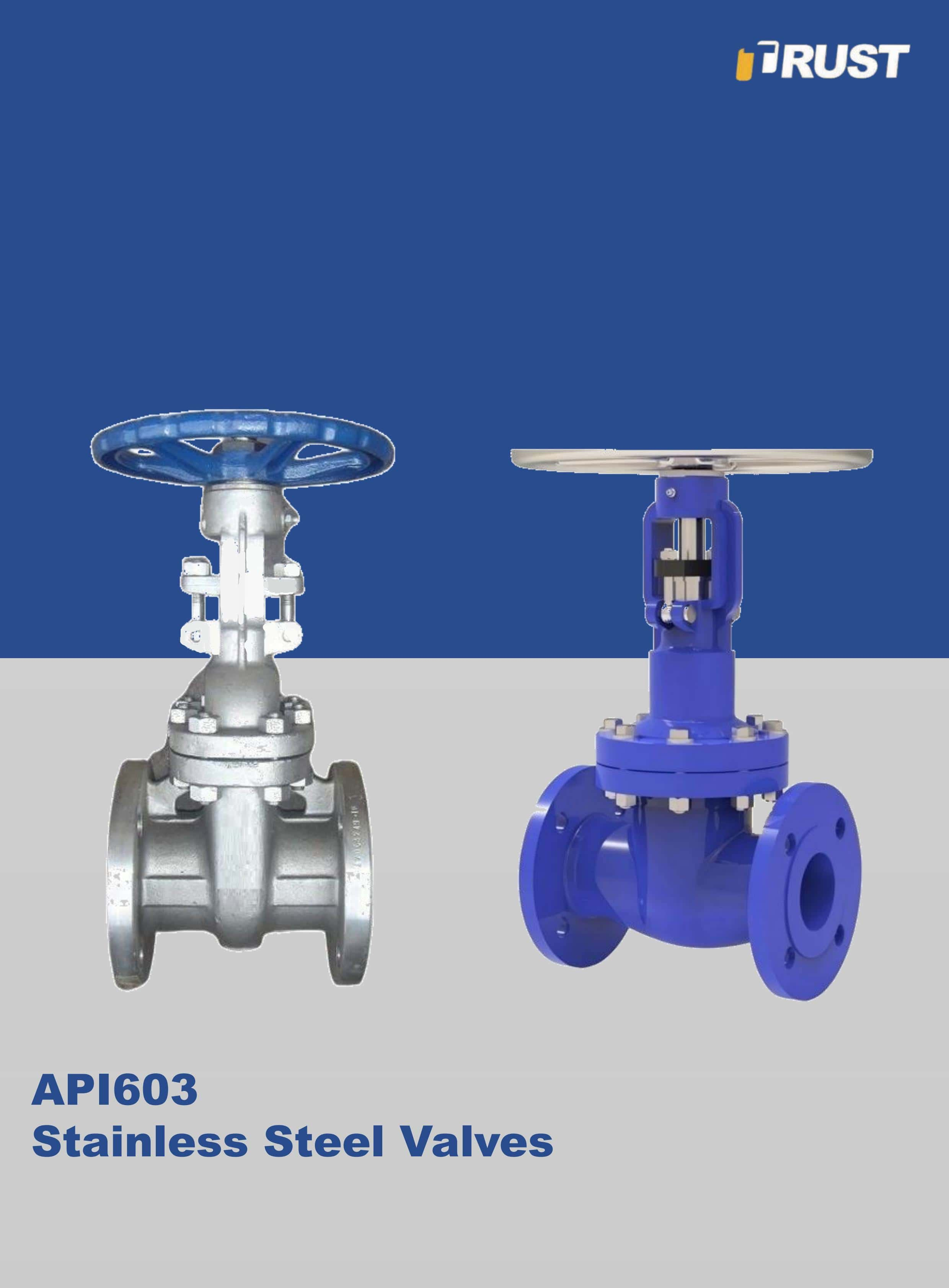 Austenitic Stainless-Steel Valves for Corrosive ServiceFor chemical and petrochemical duties, this family covers 316/316L and 304/304L gate, globe, and check valves with API 603 construction.View Product →
Seats, Seals and the Torque Budget
Soft seats dominate this category. PTFE covers roughly -29 to 180 degrees Celsius, reinforced PTFE and TFM extend pressure capability at the same temperature, and PEEK pushes the upper limit toward 260 degrees Celsius at reduced pressure. Metal-seated designs handle abrasive media and high temperature but accept a lower leakage class, which is a poor trade on a valve whose whole purpose is diverting clean liquid.
Temperature is only half of the derating story. A four-way valve rated at 40 bar at ambient may hold a small fraction of that at 180 degrees Celsius, and the reduction depends on seat material and on port position, because pressure distribution across the seats differs between positions.
Rating trap
Do not accept a single pressure figure on a datasheet. Ask for the pressure-temperature curve for the specific seat material and confirm which port position it applies to.
Torque follows the same logic. Breakaway torque on a four-way valve climbs with differential pressure across two seats, with elastomer swell after solvent exposure, and with thermal cycling that tightens the ball against the seat. Size the actuator on breakaway torque with a margin of 1.3 to 1.5, then check that the margin survives the lowest ambient temperature on site. Where the duty involves abrasive solids, high differential pressure or frequent cycling, a metal-seated ball valve for severe services is the safer reference point.
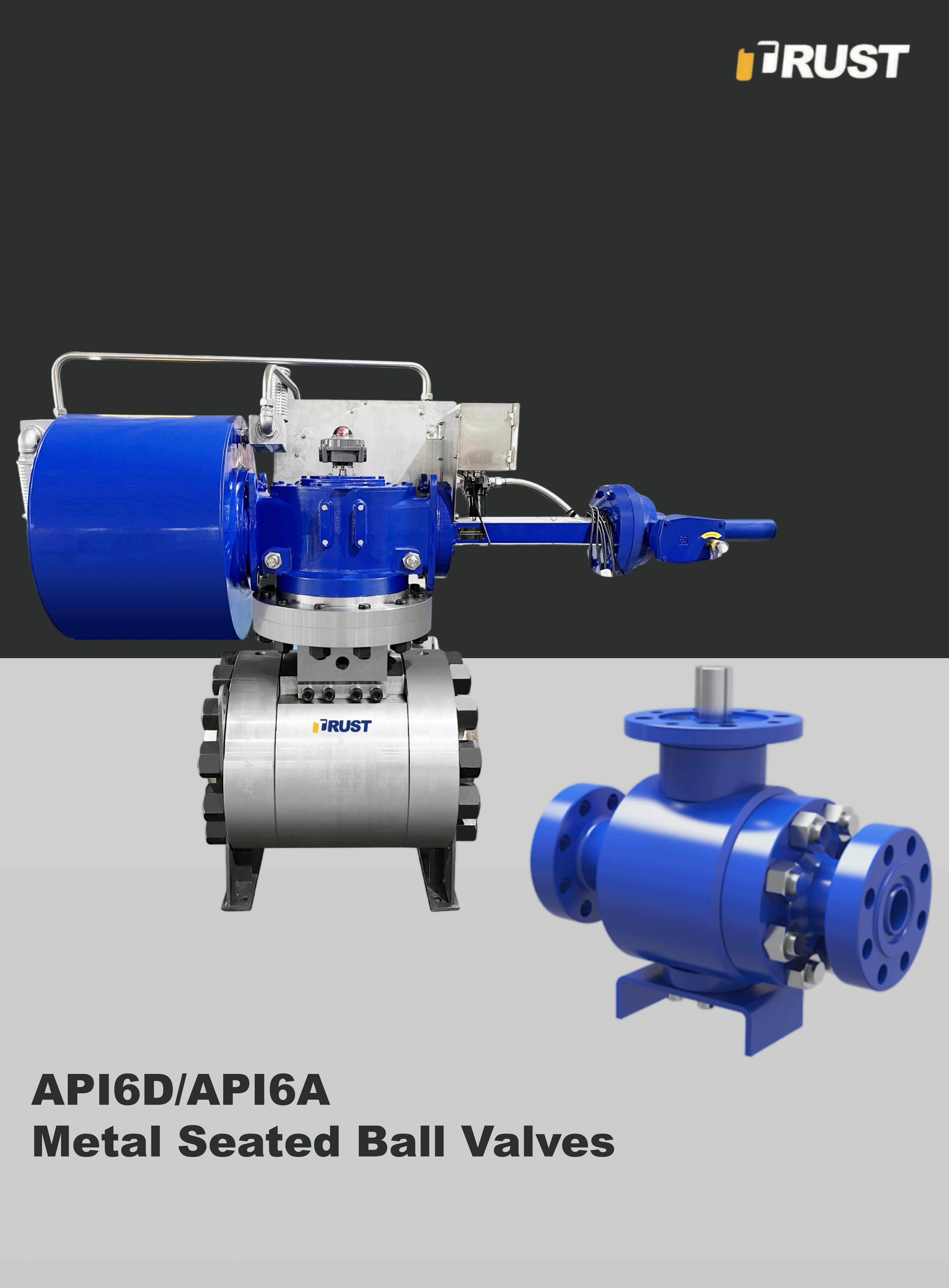
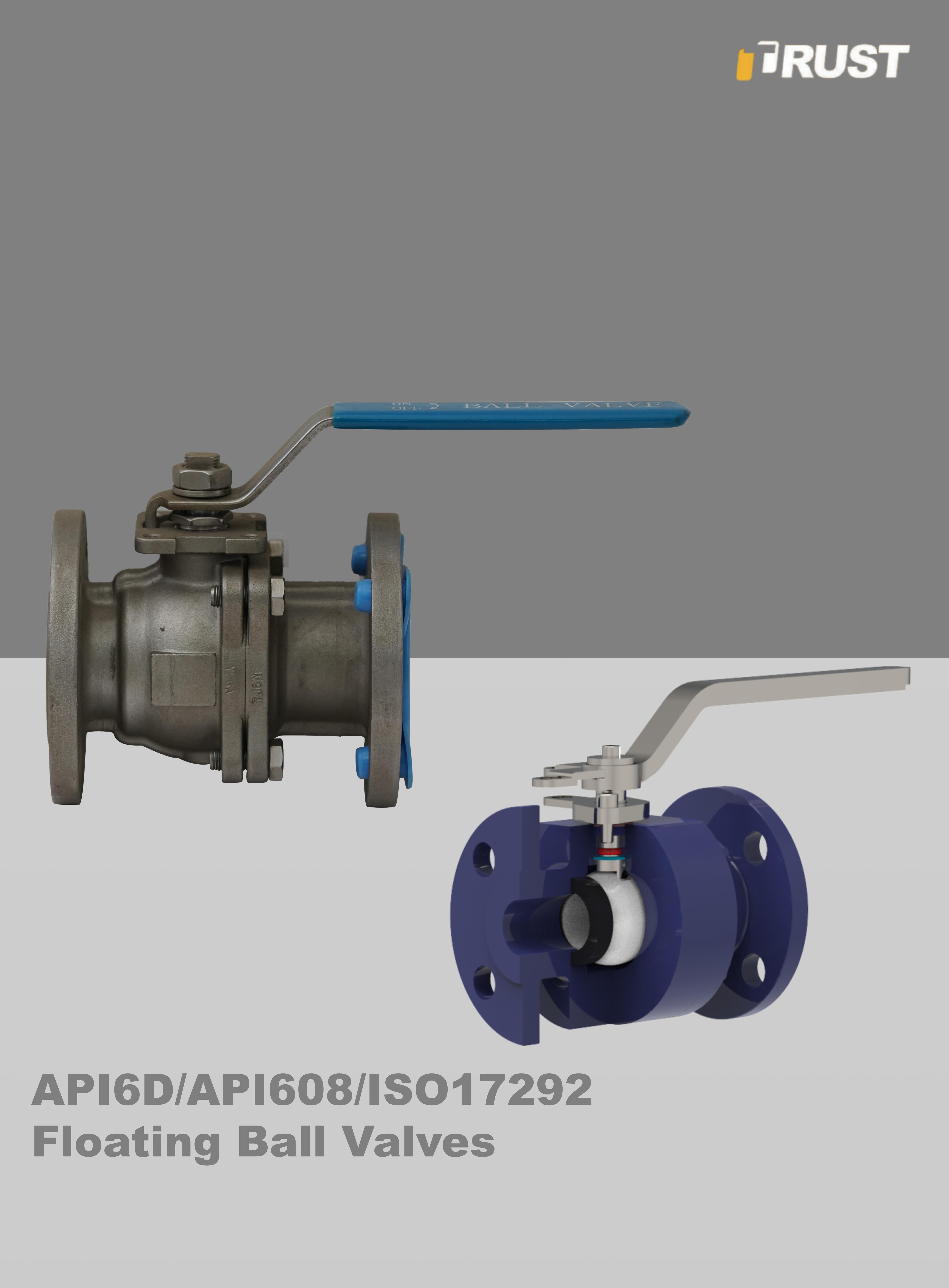
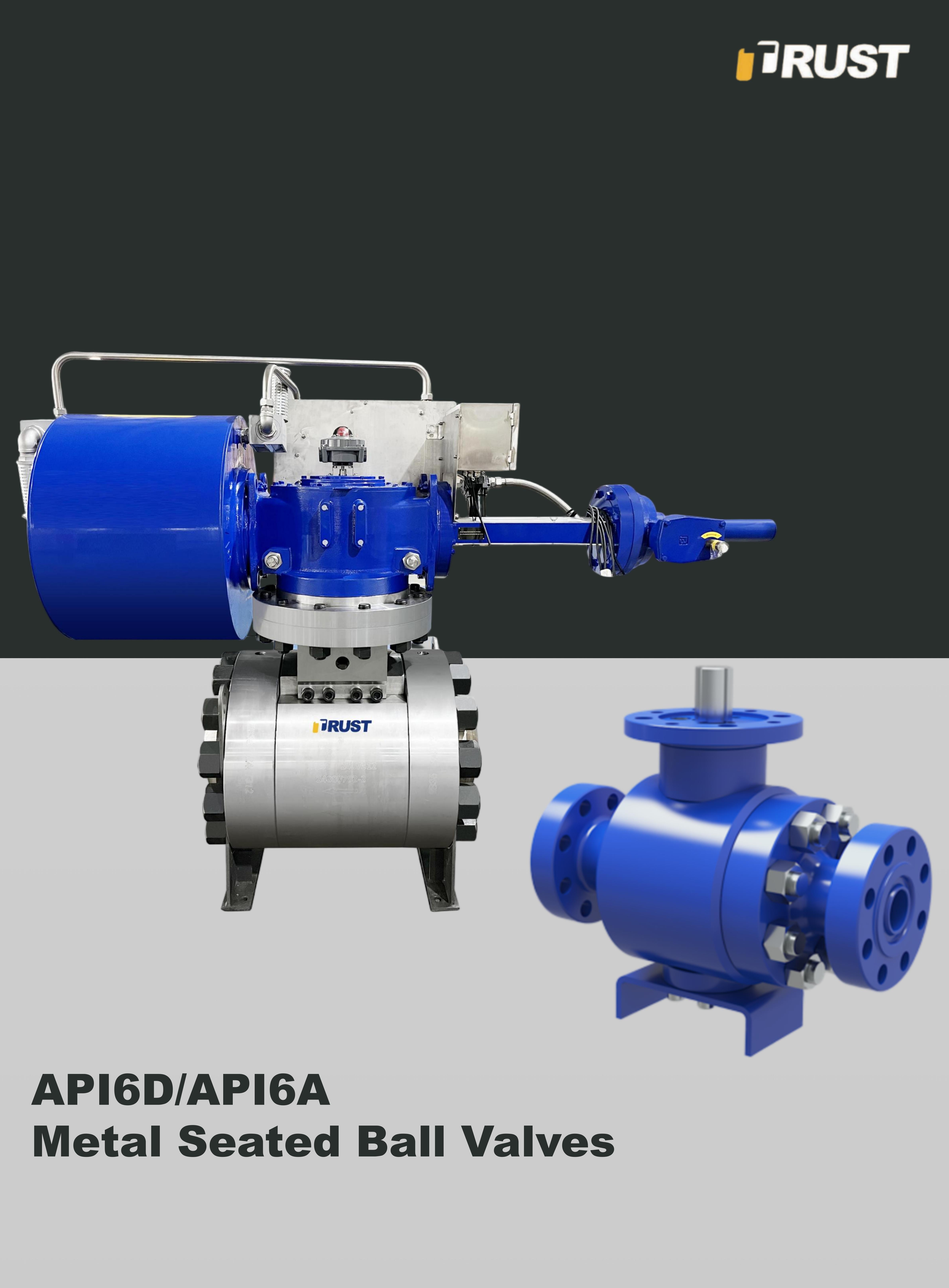 Metal-Seated Ball Valves for Severe ServiceWhere abrasive solids or high differential pressure rule out soft seats, these metal-to-metal valves cover floating, trunnion, and top-entry designs for demanding duties.View Product →
Six Checks Before the Purchase Order Goes Out
- Porting drawing. Position one and position two with flow arrows, referenced by drawing number on the order.
- Bore and capacity. Full port or reduced port, with a Cv value quoted at the actual operating conditions rather than at full open.
- Pressure class and differential. Shell rating plus the differential each seat sees in the worst position.
- Seat and seal materials. Matched to media, concentration, temperature and any cleaning or sterilisation cycle.
- Actuator interface. ISO 5211 mounting pad, output torque with margin, fail position, and stroke time for the changeover.
- Testing and paperwork. Hydrostatic shell test, seat leakage to API 598 or ISO 5208 rate A, material certificates and a certified dimensional drawing.
Where Stainless Four-Way Valves Earn Their Price
The economics work when the valve replaces a small manifold, not when it simply replaces one valve. Typical duties include:
- Demineralised water and softener changeover on boiler feed and process water headers
- Duplex filter skids, where X-port balls swap duty and standby in a single quarter turn
- Analyser and sampling circuits that must switch between process, standard and drain
- Chemical dosing and dilution lines handling solvents, caustic or hypochlorite
- Clean-in-place circuits in food, beverage and pharmaceutical plants
- Marine, offshore and hydraulic power units where space and weight are constrained
In oil and gas service the four-way pattern usually appears on utility and sampling skids rather than in the main process train, where double block and bleed or full-bore isolation is the norm. In chemical and petrochemical plants the pattern is common on dosing, sampling and small-bore distribution headers, and there the material certificate matters as much as the valve itself.
Failure Modes Worth Designing Out
Cross-port leakage after a few thousand cycles
Debris trapped between ball and seat scores the sealing surface on every rotation. A strainer upstream, or a valve specified with a slightly harder seat, usually solves it more cheaply than a larger actuator.
The wrong pattern on site
An L-port and a T-port body can look identical from outside. Mark the ports and the position indicator, and keep the porting drawing in the maintenance file.
Actuator stall at temperature
A valve that cycles easily at ambient can stall at 150 degrees Celsius once thermal expansion tightens the seat load. Recheck torque at operating temperature, not at bench temperature.
Safety note
Liquid trapped in the cavity of a four-way valve can generate destructive pressure when the line heats up. On hot service, confirm whether the design provides cavity relief and in which position it vents.
Cost, Lead Time and Spares
A stainless four-way valve typically costs more than two standard two-way valves of the same bore, and the difference is rarely the casting. It is the porting, the twin-seat machining and the actuator sized for higher breakaway torque. Where the budget is tight, compare total installed cost rather than unit price: two valves, a tee, three sets of gaskets, three actuators and the labour to fit them usually close the gap.
Lead time is the other variable. Standard L-port and T-port bodies in 316 are often stocked; a special porting, a duplex body or a NACE-compliant trim moves into a made-to-order schedule. Order seat and seal kits with the valves, and confirm that the spare kit part number matches the delivered ball pattern.
Practical rule
A four-way valve ordered with the porting drawing, the seat kit number and the actuator torque calculation attached will usually install correctly on the first visit, which is where the real saving sits.
Four-way stainless steel ball valves reward buyers who treat them as small engineered assemblies rather than catalogue items. Confirm the porting pattern against the drawing, match the seat and seal materials to the media and temperature, derate the pressure for the actual duty, and size the actuator on breakaway torque with a margin. Do those four things and the valve disappears into the process, doing the work of a manifold without the leak paths. Skip them and the valve will still be visible a year later, in the maintenance log.


 No.100 Xiejin Avenue, Funing County Economic Development Zone, Yancheng City, Jiangsu Province
 +86-515-87398111
 office@trustvalve.com
