 English
 русский
 Français
 中文简体
中文简体 Português
 Español
 italiano
 عربى
عربى فارسی
فارسی

Valve engineering brief
Two-Piece Stainless Steel Ball Valves: The Workhorse Your Plant Already Relies On
From chemical dosing skids to cooling water lines, the two-piece stainless steel ball valve is the default choice for reliable shutoff. This guide explains how it is built, where it makes sense, and what to check before you specify one.
Maintenance engineers often say the same thing when a stainless line needs a dependable block valve: “just give me a two-piece stainless steel ball valve.” The request is not about fashion; it is about the right combination of corrosion resistance, repairability, and price. This article explains why that combination works, and where you need to look more carefully.
What a two-piece stainless steel ball valve actually is
A two-piece ball valve is named after its body construction: a single main body and an end cap that are threaded, bolted, or welded together. In the one-piece design, the body is machined as one shell that cannot be opened after assembly. In the three-piece design, the body is split into three sections, so the ball and seats can be removed while the valve body stays in the pipeline. The two-piece sits in the middle: more serviceable than a one-piece, but cheaper and more compact than a three-piece.
Inside, most two-piece valves use a floating ball. Line pressure pushes the ball against the downstream seat, forming a seal that becomes tighter as pressure increases. This is why the type is specified for bubble-tight shutoff in clean, non-abrasive media. In ASME terms, common pressure classes are 150, 300, and 600; smaller sizes are usually rated to 1000 psig or more.
The body material is usually CF8M (cast 316) or CF3M (cast 316L). For wetted parts, the ball and stem should be made from the same alloy family as the body. A valve that looks like stainless steel but uses a carbon steel ball will fail quickly once the chromium-rich surface layer is worn or pitted.
| Design | Body construction | Serviceability | Relative cost | Typical service |
|---|---|---|---|---|
| One-piece | Single cast or machined shell | Must remove from line for any repair | Lowest | Disposable service, sealed systems |
| Two-piece | Body and end cap, threaded or bolted | Can be opened if the end cap is removed | Moderate | Chemical, water, instrument air, general shutoff |
| Three-piece | Three parts clamped together | Ball and seats accessible in line | Higher | Frequent cleaning, sterile and pigging systems |
End connections also influence the design. Threaded ends dominate from 1/4 to 2 inches, socket-weld ends are common in high-integrity piping, and flanged ends appear on larger sizes. A flanged two-piece valve is a reasonable choice when the plant already uses a flanged standard for piping maintenance.
Where the two-piece stainless ball valve earns its place
Two-piece stainless steel ball valves are the default for general process isolation in chemical and petrochemical plants. They handle water, steam, dilute acids, caustic solutions, solvents, and compressed air. They are also common in cooling water systems, instrument air lines, and chemical dosing skids, where even a small leak would quickly become a safety or product-quality problem.
For hydrocarbon service, the same valve appears in utility systems—fire water loops, instrument gas, hydraulic lines—rather than in severe production service. In those cleaner, lower-pressure applications, the two-piece floating ball design provides reliable shutoff without the expense of a trunnion-mounted valve. The design also suits stainless tubing systems in analyzers and sampling panels, where compactness and corrosion resistance matter more than extreme pressure handling.
The link between two-piece construction and floating-ball geometry is easy to underestimate. The end cap provides precise seat preload, the body holds the ball cavity, and the floating ball does the sealing work. This is the architecture used in our soft-seated floating ball valve for chemical and process duties.
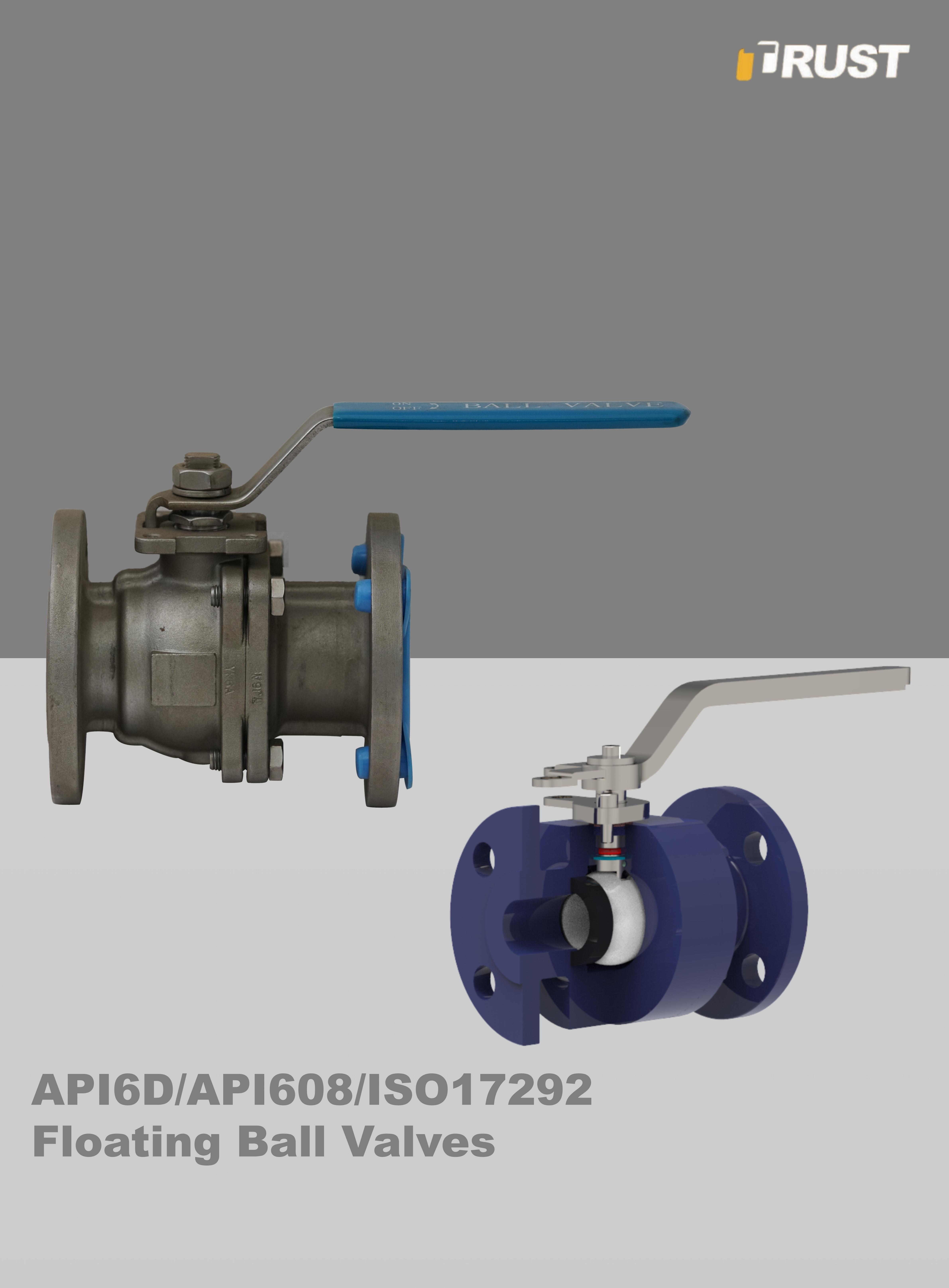 Trust Valve Soft-Seated Floating Ball ValveThis two-piece floating ball valve ensures uniform sealing force and bubble-tight shutoff, ideal for chemical and process duties where reliable low-to-medium pressure flow control is required.View Product →
Five checks before you specify a two-piece ball valve
A catalogue specification will tell you about pressure class and connection size, but not the details that determine service life. These five checks will help you separate a well-built valve from a commodity compromise.
- Material traceability. Ask for CF8M or CF3M castings and a mill certificate that matches the heat number. Cheap valves occasionally substitute 304 for 316L without documentation.
- Seat material and compression. PTFE seats are standard up to 150–180°C. RTFE offers better dimensional stability; PEEK extends the range to about 260°C and improves abrasion resistance. Seat compression affects both leak tightness and operating torque.
- End connection integrity. Threaded ends must have straight or taper threads that match the piping spec; socket-weld ends need proper socket depth. Reduced-bore designs lower the Cv and change the pressure drop—check the port diameter, not just the end size.
- Leak test standard. A manufacturer that quotes ISO 5208 or API 598 leak rates is giving you a measurable guarantee. Fire-safe certification to API 607 is another indicator of engineering intent.
- Spare parts support. A repairable two-piece valve is valuable only if seats, seals, and handles are available from the maker or distributor. Confirm the spare kit exists before you buy a hundred units.
For automated operation, torque is an extra variable. A valve that works fine with a lever handle may exceed the torque of a standard quarter-turn actuator if the seat is highly compressed. Request full torque data and compare it with the actuator torque class.
Selection tip: always ask for the pressure-temperature curve for the exact seat material and body size. The printed pressure class is only valid at a reference temperature, usually ambient.
For severe-service conditions—abrasive slurries, frequent throttling, or temperatures above the PTFE limit—the standard floating ball design will not be durable. A metal-seated ball valve, offered in two-piece or three-piece body arrangements, is the more robust answer.
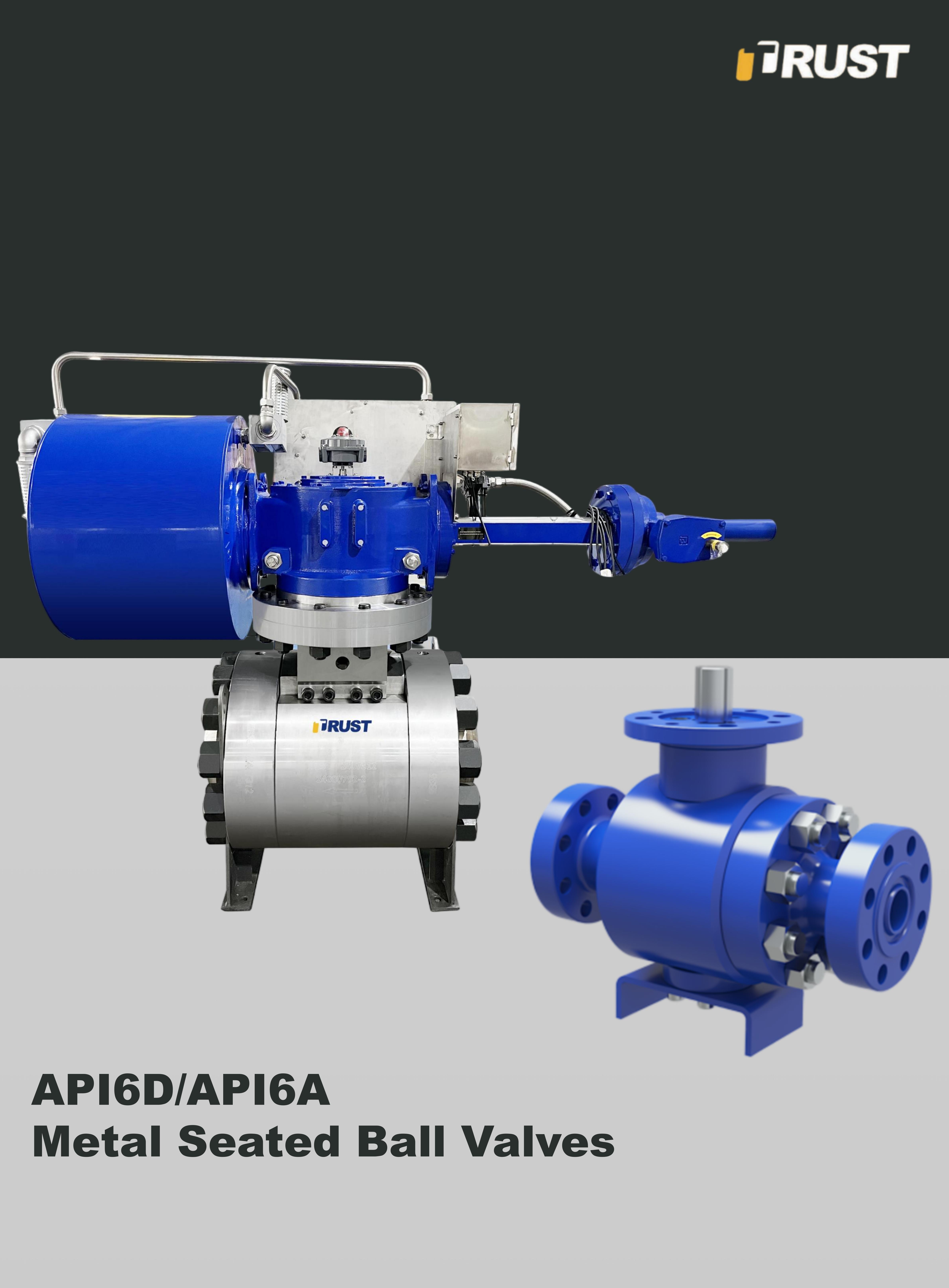 Severe-Service Metal-Seated Ball ValveEngineered for high-temperature, high-pressure and abrasive media, this metal-seated ball valve withstands up to 650°C and Class 4500, ensuring durable sealing in hazardous environments.View Product →
You can find broader selection guidance in our article on when to use stainless steel ball valves.
Small details that decide long-term performance
Once the valve is installed, the reputation of the design depends on components that are easy to overlook on a drawing.
The difference between a two-piece valve that leaks after a year and one that keeps working for a decade is usually not the ball—it is the seat, the stem seal, and the body joint.
The first detail is the stem seal. A self-compensating or adjustable packing design maintains the correct compression as the valve cycles. If the packing is not loaded consistently, the stem will develop a slow weep that is easy to ignore and expensive to fix. The second detail is ball surface finish. A smooth ball, around 4 Ra or better, prevents premature seat wear. The third is anti-static protection: in flammable service, the stem-to-ball connection should have a positive conductive path to avoid static ignition.
Watch out for: thermal cycling can cause body-joint leakage in cheap two-piece valves. If the body is joined with thread sealant only, ask the manufacturer for a tested leak rating after repeated thermal cycles. A gasketed or welded joint is safer in steam and hot-water service.
Installation matters too. Mount the valve so the stem is accessible and the body joint is not facing downward in wet service, where trapped liquid can corrode the threads. For lines that require frequent cleaning, consider a three-piece valve instead, because the center section can be removed without disturbing the pipe work.
Maintenance tip: keep one spare two-piece valve in each common size in your stores, and stock a seat-and-seal kit for line repairs. The repairable body style means a trained fitter can bring the valve back to service on-site instead of waiting for a replacement.
The pragmatic choice for general process isolation
A two-piece stainless steel ball valve will not solve every flow-control problem. For high-cycle throttling, abrasive slurries, or cryogenic temperatures, a special-purpose design is a better investment. But for the large majority of shutoff duties in stainless piping systems, the two-piece body delivers the right balance of cost, maintainability, and sealing performance.
The decision does not end at the part number. Confirm material traceability, check the seat rating against your actual process temperature, ask for the pressure-temperature curve, and verify spare-part availability. That is what turns a catalogue commodity into a dependable component.
Choose the two-piece when you need a corrosion-resistant, repairable, and cost-effective block valve—then verify the details that affect field life before you buy.


 No.100 Xiejin Avenue, Funing County Economic Development Zone, Yancheng City, Jiangsu Province
  +86-515-87398111
  office@trustvalve.com